
"I didn't have the language for it then — but I've always dressed for the woman I was becoming, not the woman I was supposed to be."
Read moreThe Politics of Fashion and Why I Choose Joy
Every time I get dressed, I stand in front of my closet, my hand hovering over brightly colored cardigans, thrifted blouses and dresses that I've been excited to wear. And then I hesitate.
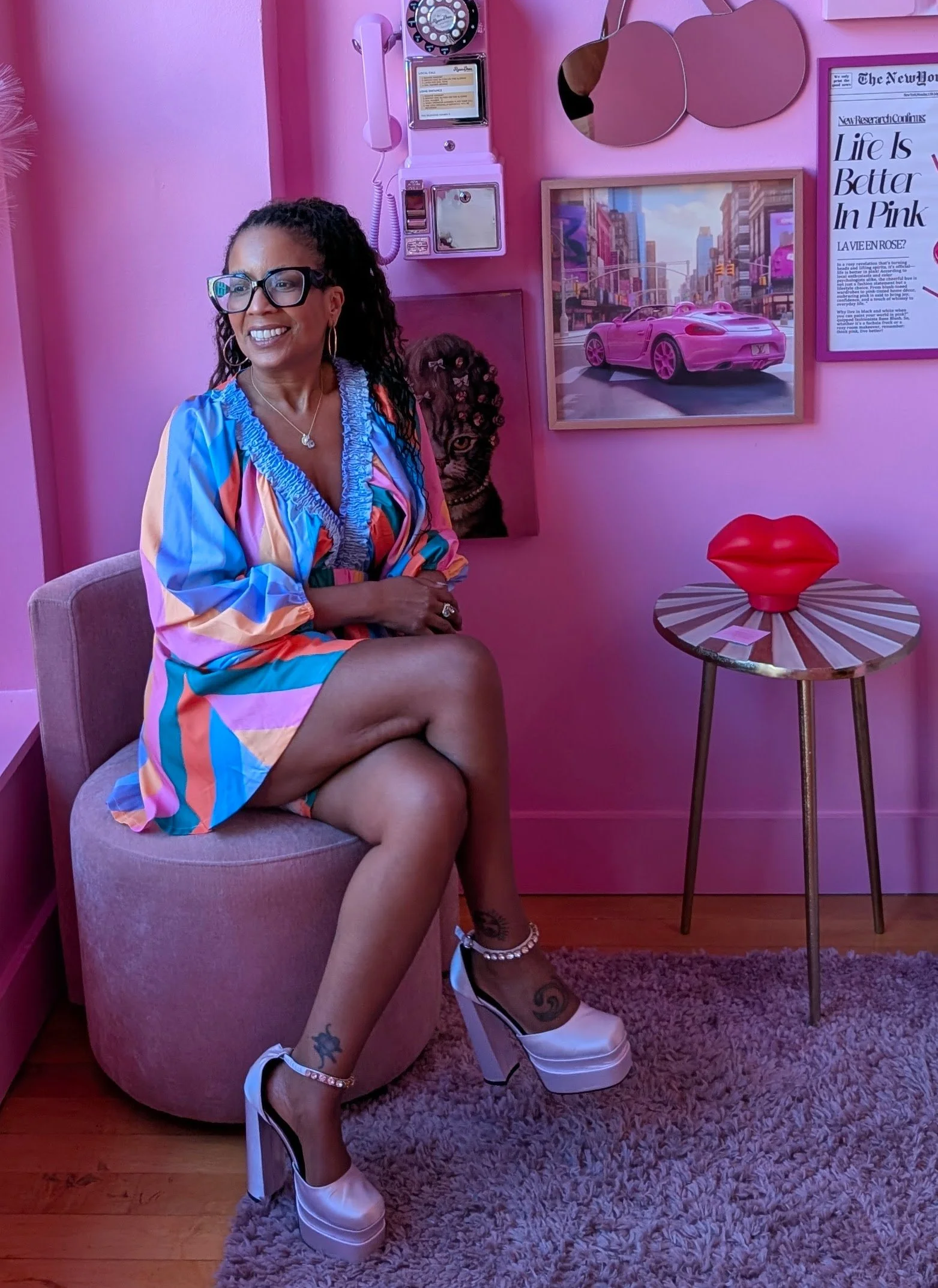
Is this ridiculous? Is this tone-deaf? Should I be reaching for something more subdued, more appropriate instead?
I pull out something colorful anyway. I pair it with something fun. It might be a patterened skirt, a lapel full of vintage brooches, or hot pink tights. And when I look in the mirror, I feel something I haven't felt much of lately, I feel like myself.
And here’s what’s been bouncing around my brain:
Joy isn’t frivilous. It’s defiant!
There's an idea that during serious times, we should match the gravity of the moment with our appearance, our homes, our entire aesthetic lives. Looking at you Pantone and that “color” of the year. That choosing color, beauty, or whimsy is somehow disrespectful to what is going on around us. That we should mute ourselves. Make ourselves somber and appropriate.
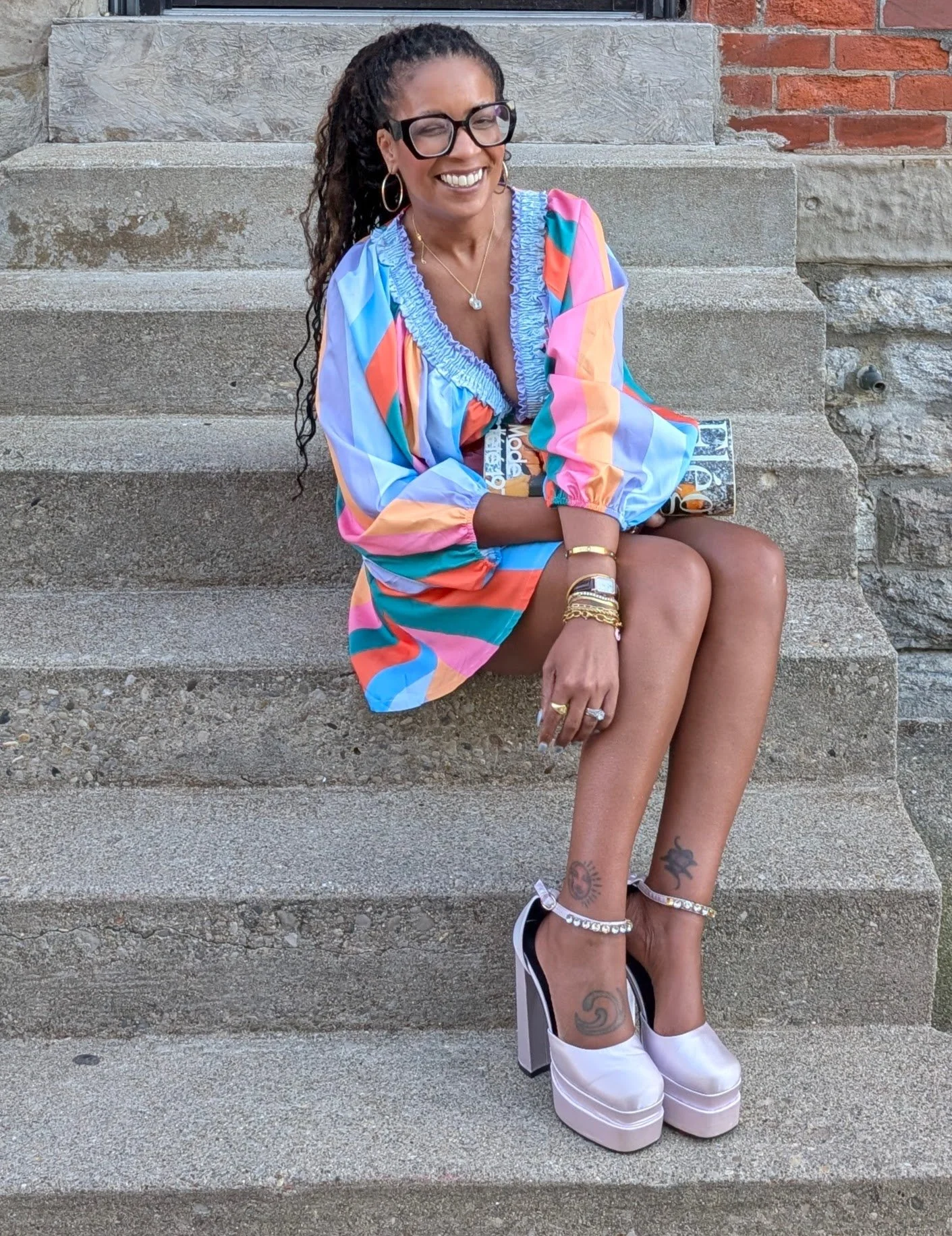
But I refuse to internalize oppression. I’m not bending the knee and embracing what they’re trying to normalize.
Authoritarian movements have always understood the power of beauty and self-expression. That's why they target it first. They ban books and art. They mandate dress codes. They criminalize gender expression and cultural identity. They paint gray over murals and declare that color itself is suspicious, frivolous, dangerous.
The maximalist, colorful aesthetic that I've spent years cultivating isn't an escape from politics. It's a refusal to comply with the obliteration of culture that precedes every authoritarian playbook.
When I choose to wear a vintage floral dress on a random Tuesday, I'm not being oblivious. I'm being visible. And visibility, right now, is a form of resistance.
We like to pretend that what we wear is purely personal, but fashion has never been apolitical. (Every thing in life is political but that’s a conversation for another day).
The suffragettes wore white dresses to demonstrate their purity of purpose and to be visible in marches and in photographs.
Flappers bobbed their hair and dared to show their knees in public in response to increasingly puritanical sensabilities of the 1920s.
Rosie the Riveter's red lipstick wasn't vanity. It was an assertion that women could be both strong and feminine. That they could claim industrial spaces while refusing to surrender their identity.
Women were mandated to wear skirts and dresses in the workplace even into the 1980s.
During the AIDS crisis in the 80s, ACT UP activists used fashion—bright colors, bold slogans, leather and pink triangles—to demand visibility for a community that the government wanted to let die quietly.
What we wear communicates who we are, what we value, and what world we believe is possible.
There's a difference, of course, between mindless consumption and intentional self-presentation. I'm not talking about buying into every trend that crosses your algorithm or filling a cart with fast fashion every other week from corporations that fund the very systems crushing us.
I'm talking about the deliberate choice to show up in the world as your full self. To dress in a way that says: Fuck you. I’m here. I refuse to disappear.
My aesthetic isn't always about following trends or performing femininity for the male gaze. It represents something deeper: women claiming space, making beauty on our own terms, refusing to shrink or dim or apologize for existing in color.
This week, I've worn a bright orange striped skirt. Polka dots paired with a snarky graphic t-shirt. I've paired a hot pink vintage sweater with a floral midi skirt. I have an armful of stacked bracelets and giant hoop earrings.
I've gotten dressed on days when I'm not leaving the house, because the act of choosing myself—choosing color, choosing beauty, choosing to show up—feels like the only form of control I have right now.
I'm not performing for anyone. I’m resisting the idea that I should become a ghost in my own life.
The colors and patterns I wear feel like armor. They feel like a Fuck You to every voice—internal or external—that suggests women of a certain age should be less visible. They feel like a refusal of the beige minimalism that Instagram tries to sell us as “sophistication” and “quiet luxury” but that actually just makes us easier to ignore.
When I wear something bright or pair plaid and polka dots, I'm not escaping reality. I'm moving through my life with intention. I'm saying that even in especially in the hardest moments, I deserve to feel like myself.
I’m not here to tell you to dress like me. I'm certainly not saying that minimalism or neutral palettes are wrong. You don’t need to perform joy if you’re not feeling it.
However, I think we should reject the pressure to shrink. We don’t need to make ourselves smaller as a gesture of seriousness or an act of solidarity.
The quiet voice telling you to tone it down, that you’re too much, you’re doing too much—fuck that voice.
Choosing joy in your daily life, including in what you wear, isn't frivolous or tone-deaf. It's an act of resistance. It's a declaration that they don't get to take this from you too.
So I'll keep wearing color. I'll keep thrifting vintage pieces that make me smile. I'll keep showing up as myself.
And I hope you'll join me in a way that feels right for you.
The revolustion will be televised…so what will you be wearing?