
Somewhere along the way, somebody sold us a lie about fairy tales.
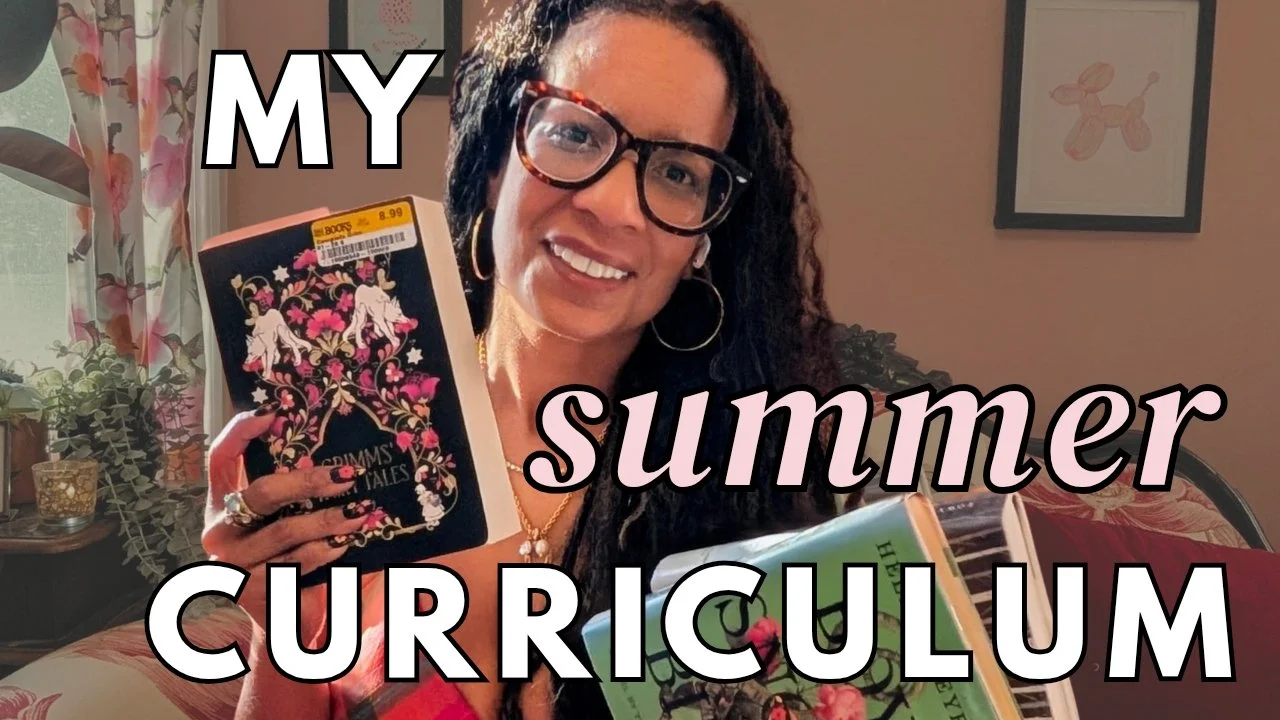
We were fed stories about pretty young girls waiting to be rescued. A love that fixes everything and a magical, a life changing kiss delivered by a prince. The version we got was softer. All of the real conflict and sharp edges were filed off. A lot of us carried it into adulthood without ever thinking to check the original.
I’m going to the source this summer. I'm spending my slow months down in it, taking these stories apart to see what they're actually made of. I'm calling it Deconstructing Fairy Tales.
The things I’m discovering already are fascinating.
The woman we were taught not to become
When you go back to the oldest retellings, the girl is still there, but she’s never the one with the power. The power belongs to someone else. The crone. The godmother. The witch out in the wood who knows things the village doesn't. The old woman who’s been through it all but her warnings and lived experience are painted as at best, or the rantings of a mad woman, at worst.
She's everywhere in the original stories, and she's been quietly written down and out of the ones we inherited. She got older. She got stranger. Then she got turned into a warning. Don't end up like her — alone, odd, out past the edge of town.
But I've started reading her differently. She lives on her own terms. She's a little feared and feral, which means she's mostly left alone. She has knowledge nobody could take from her, clearly defined boundaries, and a great cottage in the woods — the OG she-shed. Somewhere along the line we were taught to dread becoming her. I've decided the opposite. I'd like to walk straight toward her.
Why now at 52?
I don't think this study would have landed on me at thirty. It found me now for a reason.
The stories I write are about women in the back half of their lives — women who are not finished, not invisible, not done with any of the good parts. And the more time I spend in the old fairy tales, the more I realize they got there centuries before I did. The wise woman, the second-act heroine, the one whose best chapter comes late is not a modern invention. She's been there the entire time but somewhere along the line it was decided that her story wasn’t worthy of telling.
How I'm actually doing this?
I made it a system, because it’s what I do. If there’s a reason to use a new planner, I’m gonna do it. Each tale gets a few layers.
First, the tale itself — the oldest, strangest version I can find, before anyone made it safe. Then the lore: the history and the scholarship, which is its own quiet thrill. I'm reading Maria Tatar and Marina Warner for the deep background, Angela Carter's The Bloody Chamber for retellings, and Clarissa Pinkola Estés's Women Who Run with the Wolves for the part that reads like it was written directly to me. Then the thread, where I pull the story back toward my own writing and my own life and see what it has to say.
To make it more submersive, I'm building a soundtrack for each tale — a playlist that sounds like the particular wood I'm walking into that week. Something haunted for the dark ones. Something warmer for the ones that end in light. It turns out the fastest way into an old story isn't through your eyes at all; it's through your ears. I put the playlist on, and I'm transported to the wood, in the cottage, at the edge of the dark. I didn't expect it to change the work as much as it has.
Then the making, a short creative response whether it be a short essay, a few pages of journaling, or an art project.
And one last layer, which is the most personal, a tarot reading and practice. I’m the Witch's Wisdom deck I already own, which could not be more suited to a summer about witches and woods. This layer serves a mirror. Every tale has a woman at its center, and pulling a card is my way of sitting down across the kitchen table from her and askingn her, what do you have to teach me?
Where I'm starting, and where it ends
Six tales, across the whole slow summer(or what’s left of it).
I'm starting in the wood, with Hansel and Gretel, and what it actually means to leave the path — a thing I've done more than once in my life, usually against advice, usually for the better.
So, that’s how I’m spending my summer in an effort to challenge myself to learn something new and stop doomscrolling. I’m going down into the oldest versions of the stories we were all raised on. I will probably never look at an evil stepmother or fairy godmother the same way again.
If you’d rather watch and follow along the journey, feel free to head over to my Youtube channel
New here? I'm Courtnee — I write about slow, intentional living, the creative life, and midlife on my own terms. If you'd rather watch than read, the whole study is unfolding over on YouTube, one tale at a time.